


Your Complete Guide to Advertising Signage That Actually Works
Every dollar spent on signage that goes unnoticed is a dollar wasted. This guide breaks down the real-world factors that separate forgettable signs from revenue-driving displays — backed by industry data and hands-on experience.
What You'll Find in This Guide
- Picking the Right Location (and Why Most Businesses Get It Wrong)
- Design and Sizing That Grabs Attention at a Glance
- Materials and Durability — What Holds Up and What Doesn't
- Crafting a Message with a Clear Call to Action
- Navigating Permits, Zoning, and Local Regulations
- Lighting and Visibility After Dark
- Digital vs. Traditional Signage — An Honest Comparison
- Signage Type Breakdown: Engagement, Cost, and ROI
- Featured 3D Hologram Display Solutions
- Frequently Asked Questions
There is a reason the phrase "location, location, location" gets repeated in every marketing textbook ever printed. But when it comes to advertising signage, location is only part of the story. The truth is, a well-placed sign with poor design will underperform a great design in a decent spot almost every single time. The signage you choose — and how you choose it — sends a message about your brand before a customer ever walks through the door.
I have spent years working with businesses that range from local coffee shops to national franchise operators, and the same handful of mistakes come up over and over again. Signs that are too small for the road they sit on. Materials that fade within six months. Digital screens that loop the same stale content until people stop noticing them. None of these problems are difficult to solve, but they require some thought up front.
This guide walks you through the seven factors that matter most when choosing advertising signage, and it includes a few data-driven comparisons you will not find in most blog posts on this topic.
1. Picking the Right Location (and Why Most Businesses Get It Wrong)
Signage placement is deceptively simple. You want high foot traffic, good sightlines, and a viewing angle that gives people enough time to actually read what your sign says. In practice, that means accounting for things like vehicle speed on the nearest road, overhead obstructions, competing signage from neighboring businesses, and seasonal changes in foliage that might block your display during summer months.
Walk the area at different times of day. Stand where your customers will be standing. Check whether street lighting washes out your sign at night or whether a shadow falls across it during peak afternoon hours. These details sound obvious, but they are the exact things that get overlooked during installation — and they are expensive to fix after the fact.
Indoor signage has its own set of considerations. Retail environments benefit from signage placed at eye level near decision points — think end caps, checkout areas, and entrance displays. Research from the Point of Purchase Advertising International group found that in-store displays can lift product sales anywhere from 20 to 45 percent depending on placement and design.
2. Design and Sizing That Grabs Attention at a Glance
The design of your sign needs to communicate your core message within roughly three seconds. That is the average amount of time a pedestrian or driver will spend looking at any given sign. If the font is too small, the colors blend into the background, or the layout tries to say too much at once, you have already lost them.
Keep your typography limited to two fonts at most — one for the headline and one for supporting text. High-contrast color combinations (white on dark blue, black on yellow, white on red) consistently outperform low-contrast pairings in readability studies. And leave whitespace. Cramming every inch of your sign with information makes it harder to read, not easier.
Size depends directly on viewing distance. A rough industry guideline is that every inch of letter height provides roughly 10 feet of readability. So a sign meant to be read from 100 feet away needs letters at least 10 inches tall. For highway-facing signage, you are looking at 24 inches or more.
3. Materials and Durability — What Holds Up and What Doesn't
Outdoor signage takes a beating. Rain, UV exposure, wind, temperature swings — all of it wears down materials faster than most business owners expect. Choosing the wrong substrate is one of the most common reasons signs end up looking faded and unprofessional within a year.
Aluminum composite panels (like Dibond) are a solid mid-range option for wall-mounted and post-mounted signs. They resist warping, hold printed graphics well, and handle most weather conditions without issue. Acrylic is a popular choice for illuminated signage because of its clarity and light transmission properties, though it scratches more easily than polycarbonate alternatives.
For temporary or event signage, corrugated plastic (Coroplast) is lightweight and cheap, but it will not survive more than a few months outdoors before showing wear. Vinyl banners remain a staple for short-term campaigns — just make sure they have reinforced grommets and hems if they will be exposed to wind.
Digital and holographic signage sidesteps many of these durability concerns entirely because the display content is generated electronically, meaning there is no physical graphic to fade or peel. That said, the hardware itself needs to be rated for the environment. Indoor LED and hologram fan displays are generally not designed for direct rain exposure, so placement under a canopy or inside a window-facing position is essential for exterior use.
4. Crafting a Message with a Clear Call to Action
A sign without a clear call to action is just decoration. Every piece of advertising signage should answer one question for the viewer: what do you want me to do next? Whether that is "visit our website," "stop in for 20% off today," or "scan this code for a free sample," the action needs to be obvious and achievable in the moment.
Avoid vague language. "Learn more" is weaker than "Scan for your free guide." "Visit us" is weaker than "Open Saturday — walk in for a free demo." Specificity creates urgency, and urgency drives action.
Keep the hierarchy clear. Your headline grabs attention. A short supporting line gives context. And the call to action tells people exactly what to do. Three elements, arranged in a clear visual order — that is the formula for signage that converts.
5. Navigating Permits, Zoning, and Local Regulations
This is the step most people skip until it becomes a problem. Nearly every municipality has signage ordinances that regulate size, height, illumination, placement distance from the road, and sometimes even font style and color. Installing a sign without checking local requirements can result in fines, forced removal, or both.
Start by contacting your local planning or zoning department. Many cities publish their sign codes online, which makes initial research straightforward. Pay special attention to rules around illuminated signage and digital displays, as these tend to have stricter regulations than static signs — especially in residential-adjacent areas.
If you are in a historic district or a community with a homeowners association, expect even tighter restrictions. Some areas require that signage be reviewed and approved by an architectural review board before installation, which can add weeks or months to your timeline.
6. Lighting and Visibility After Dark
If your business operates in the evening or is located in an area where people pass by after sunset, illuminated signage is not optional — it is essential. A sign that disappears after dark is a sign that works half the day at best.
There are a few approaches here. Externally lit signs use spotlights or gooseneck fixtures pointed at the sign face. This works well for traditional signage but requires careful aiming to avoid glare. Backlit signs — where the light source sits behind a translucent panel — provide an even glow that tends to look more polished and professional. Channel letters with internal LEDs are the standard for storefront signage on commercial buildings.
Newer technologies like 3D hologram fan displays offer a completely different approach. Instead of illuminating a static surface, they project a floating visual that appears to hover in midair. The effect is striking in dim environments and draws attention in a way that flat signage simply cannot replicate. INNAYA's line of hologram fans, for example, produces vivid 3D imagery visible from wide angles, making them particularly effective as window displays or trade show installations.
7. Digital vs. Traditional Signage — An Honest Comparison
The choice between digital and traditional signage is not as straightforward as most marketing articles make it seem. Both have clear strengths, and the right option depends on your budget, your location, and how frequently your messaging needs to change.
Traditional signage — vinyl banners, painted signs, dimensional letters — has lower upfront costs and virtually no ongoing technical maintenance. A well-made painted sign can last decades. The trade-off is that every content change requires a new physical sign, which adds up if you run seasonal promotions or frequently update your offerings.
Digital signage (LED screens, holographic displays, LCD panels) costs more initially but gives you the ability to update content instantly, rotate multiple messages, and display motion graphics or video. Studies by digital signage networks report that screens with motion capture up to 400 percent more views than static displays. Holographic solutions like 3D fan projectors push this even further by creating a sense of depth and novelty that flat screens cannot achieve.
Neither option is universally better. A bakery that changes its specials daily benefits enormously from a digital menu board. A law firm with the same brand message for the next five years is better served by a high-quality static sign. And a retail store at a trade show or mall kiosk that wants to stop people in their tracks? That is where holographic signage becomes a serious contender.
Signage Type Breakdown: Engagement, Cost, and ROI
How different signage formats compare based on industry averages and field performance data
Customer Engagement Rate by Signage Type
| Signage Type | Avg. Cost Range | Updatable Content | Motion/Video | Night Visibility | Best Use Case |
|---|---|---|---|---|---|
| 3D Hologram Fan | $108 – $1,560 | ✓ | ✓ 3D | ✓ Excellent | Retail, events, trade shows |
| Digital LED Screen | $500 – $5,000+ | ✓ | ✓ 2D | ✓ Good | Storefronts, restaurants |
| Backlit Channel Letters | $1,000 – $8,000 | ✗ | ✗ | ✓ Good | Building facades, branding |
| Neon Sign | $200 – $2,000 | ✗ | ✗ | ✓ Moderate | Bars, restaurants, decor |
| Vinyl Banner | $50 – $400 | ✗ | ✗ | ✗ Poor | Events, temporary promos |
| Painted/Static Sign | $200 – $3,000 | ✗ | ✗ | ✗ Poor | Long-term brand presence |
Explore INNAYA 3D Hologram Display Solutions
Advertising signage that stops people in their tracks — designed for retail, events, and commercial spaces
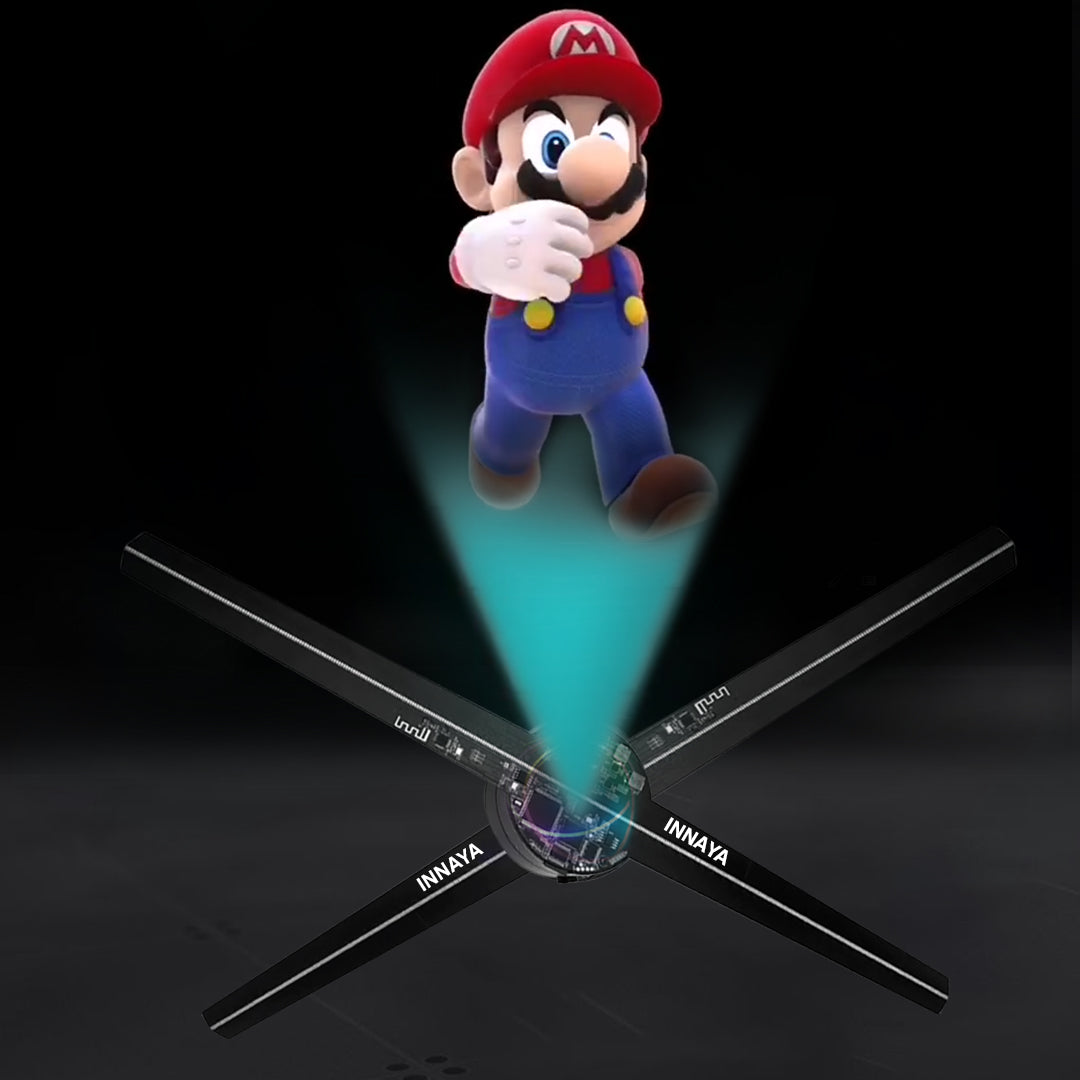
INNAYA H16" Hologram Fan
Compact 16-inch display — ideal for countertops and small retail windows
View Details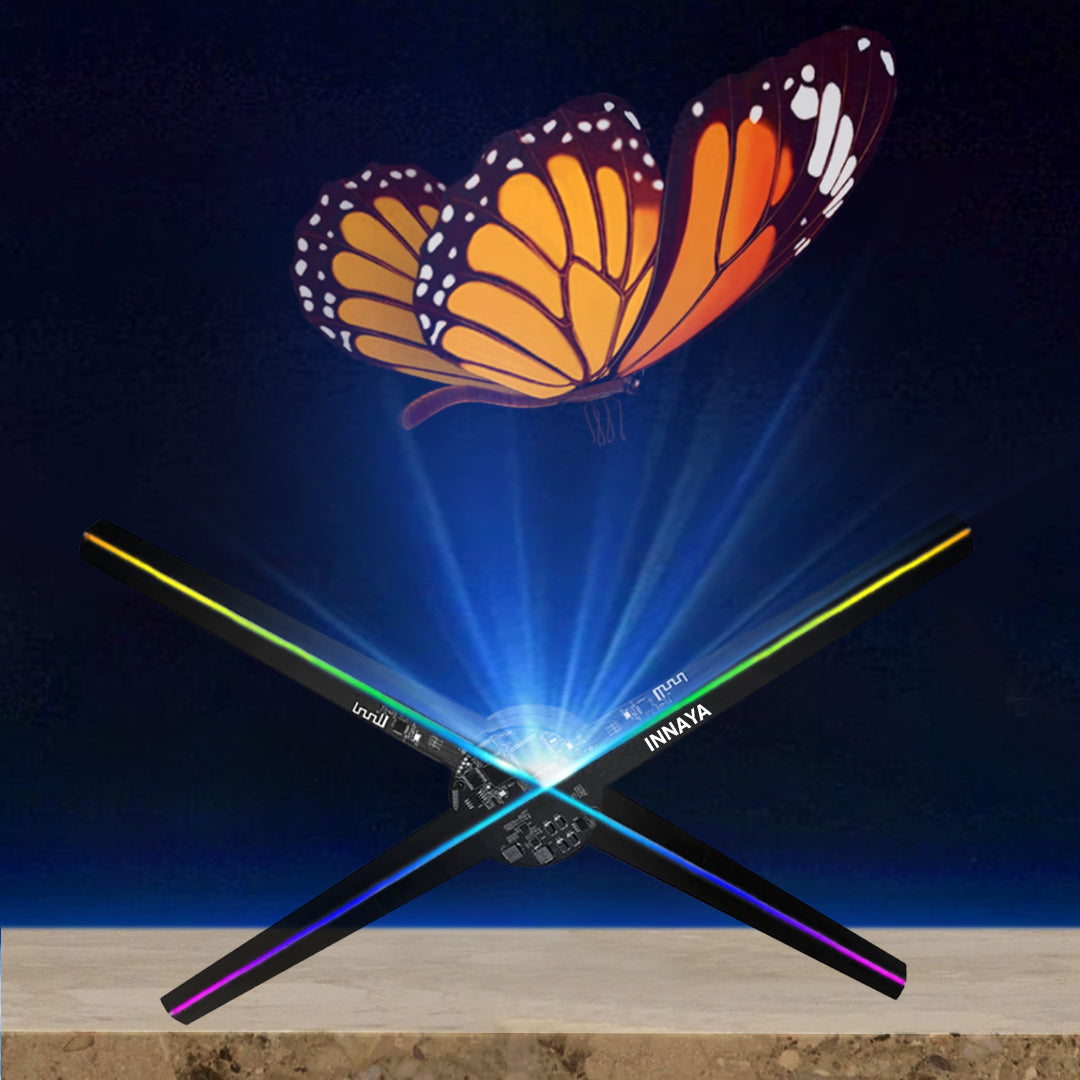
INNAYA H23" Hologram Fan
Mid-size 23-inch display — perfect for storefronts and lobby installations
View Details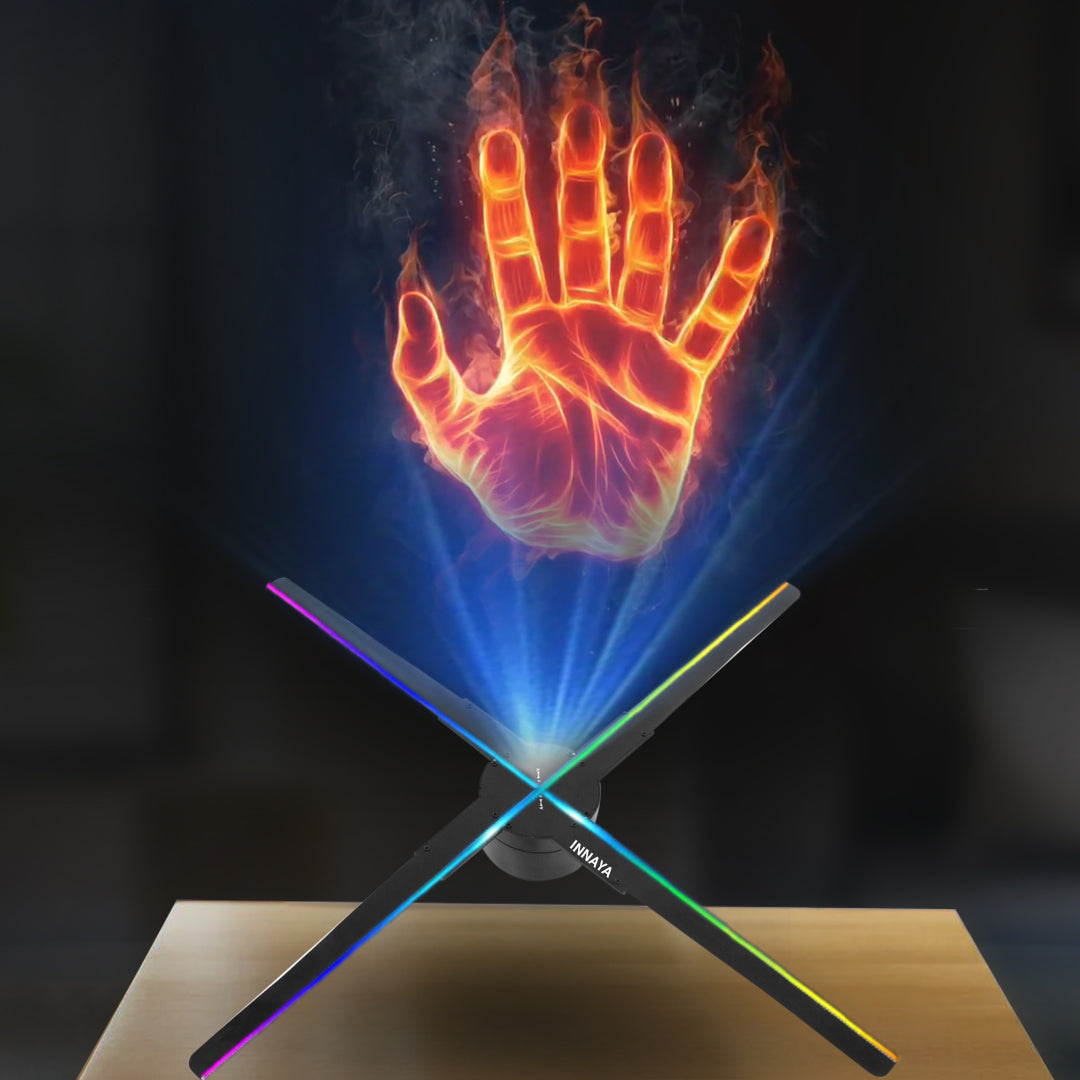
INNAYA H39" Hologram Fan
Large 39-inch display — built for trade shows, events, and high-traffic venues
View Details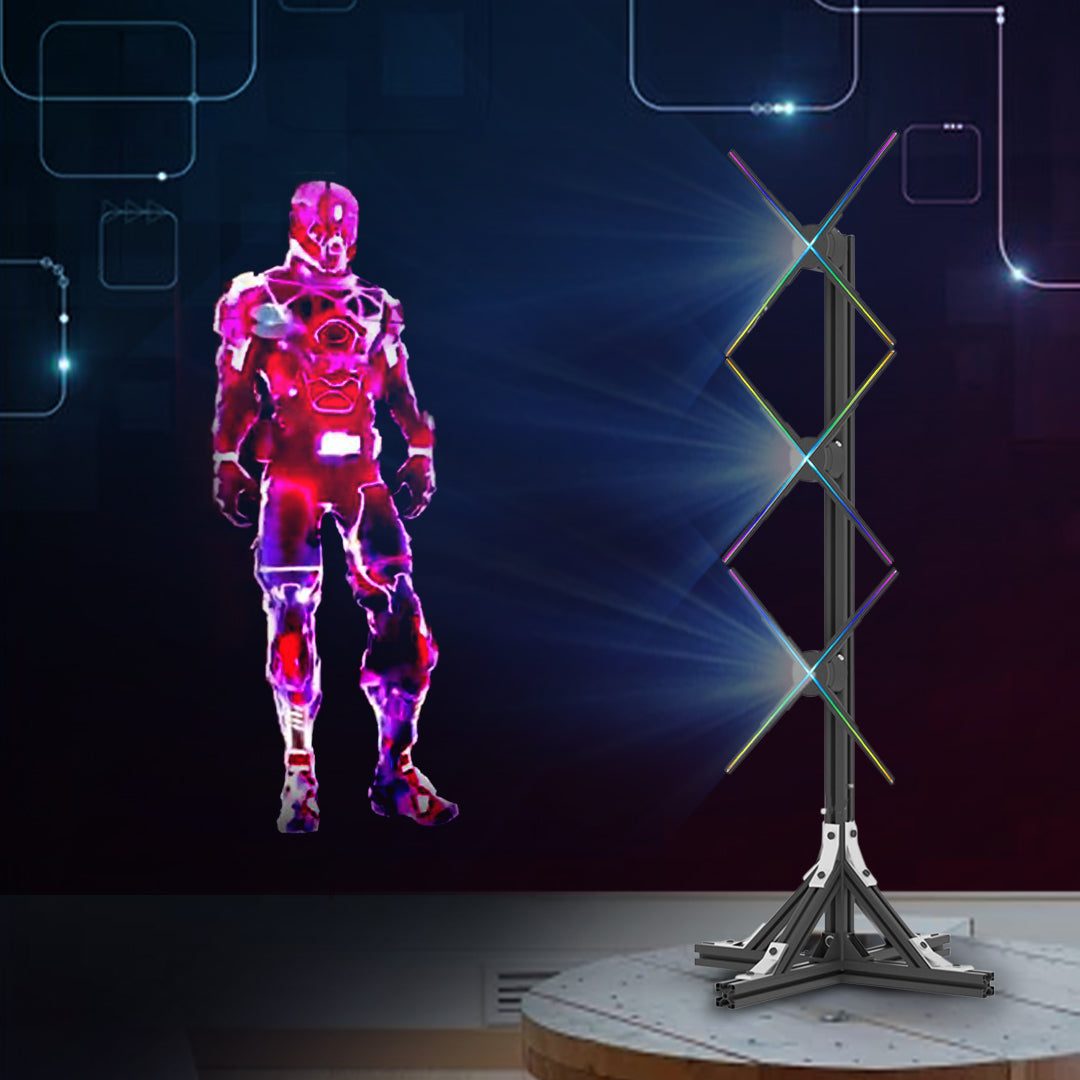
INNAYA H-PRO Lifesize
Lifesize hologram projection — the ultimate showstopper for commercial spaces
View DetailsFrequently Asked Questions About Advertising Signage
How much does advertising signage typically cost?
It depends entirely on the type and scale. A simple vinyl banner might run $50 to $400, while a custom channel-letter sign for a building facade can exceed $8,000. Digital options like 3D hologram fans start around $108 and go up to about $1,560 for lifesize commercial units, making them surprisingly accessible for the level of engagement they generate.
What signage type gets the most attention?
Motion-based and 3D displays consistently outperform static signage in foot-traffic studies. 3D holographic displays, in particular, report engagement rates above 90 percent in retail settings because the floating-image effect naturally draws the eye. Digital LED screens also perform well, especially when looping video content rather than static images.
Do I need a permit for outdoor signage?
In most cities and towns, yes. Sign permits are typically required for any permanent outdoor signage and often for temporary signs above a certain size. Regulations vary widely by municipality, so check with your local zoning or planning department before ordering materials or scheduling installation.
How long does outdoor signage last?
Material quality and environmental exposure are the biggest variables. A well-made aluminum sign can last 10 years or longer. Vinyl banners typically hold up for 6 to 12 months outdoors. Digital and holographic displays are rated for 50,000 to 100,000 hours of operation, which translates to several years of continuous use.
Can 3D hologram fans be used outdoors?
Most hologram fan units are designed for indoor or sheltered use. They work exceptionally well behind storefront windows, inside malls, at trade show booths, and in covered outdoor areas. For fully exposed outdoor placement, a protective enclosure or canopy is recommended to shield the hardware from rain and direct sunlight.
Keep Reading: Related Guides
More in-depth articles on advertising technology, holographic displays, and business marketing

Hologram Fan for Business: 7 Industries Using 3D Displays to Drive More Sales
See how retail, hospitality, automotive, and other sectors are using holographic signage to boost conversions and foot traffic.
Read the full guide →
The Best Advertising Methods Using Advanced Holographic Technology
A breakdown of how holographic advertising is being used in real campaigns — and what kind of results businesses are seeing.
Read the full guide →
How to Stand Out at Trade Show Displays with Holographic Advertising
Trade shows are crowded. Learn the specific display strategies that help brands pull attendees away from the competition.
Read the full guide →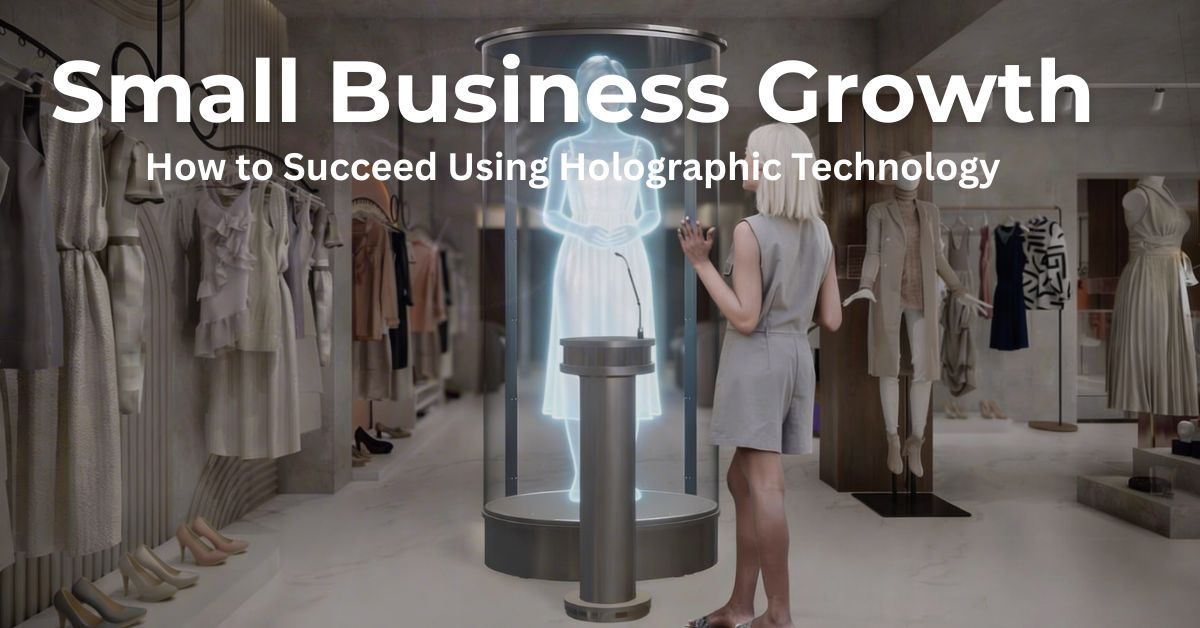
Small Business Growth: How to Succeed Using Holographic Technology
A practical look at how smaller operations are adopting holographic displays without enterprise-level budgets.
Read the full guide →